The History of Hypnosis: From Ancient Myths to Modern Science
Is hypnosis a medical miracle or a theatrical mystery? For over 4,000 years, humanity has navigated the borderlands of the subconscious. To understand how we reprogram the mind today, we must first unmask the legends, the scandals, and the surgical wonders that paved the way.
The Divine Sleep: Ancient Origins and the Myth of Hypnos
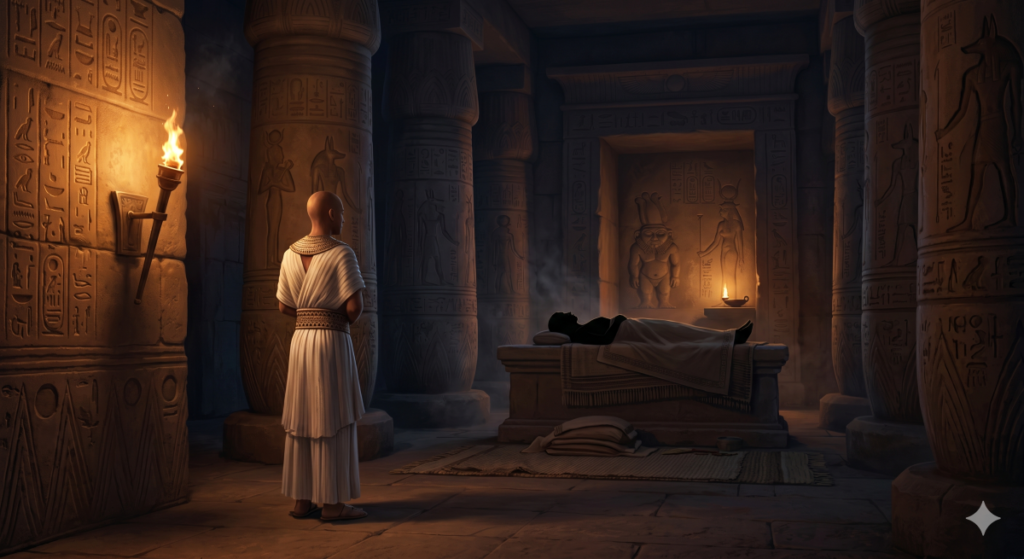
Long before the clinical couch, there were the Sleep Temples. In Ancient Egypt and Greece, healing was found in sacred sanctuaries dedicated to Hypnos, the Greek god of sleep. Seekers entered a state of ‘incubation,’ where priests whispered suggestions to mend the body and soul. While the ancients called it divine intervention, modern science recognizes these as the world’s first recorded hypnotic inductions.
The Scandal of Animal Magnetism: Franz Mesmer
In the 1770s, Franz Mesmer claimed a ‘magnetic fluid’ flowed through all living things. He used iron-filled tubs and violet robes to ‘rebalance’ his patients in the salons of Paris. While a royal commission eventually labeled his fluid a fraud, they couldn’t ignore the results: his patients were experiencing real, profound change. This era of Animal Magnetism was the flamboyant birth of what we now recognize as the power of suggestion.


Surgery Without Pain: The Surgical Miracles
Before chemical anesthesia was discovered, surgeons like James Esdaile performed thousands of painless operations using only ‘Mesmeric sleep.’ In the mid-1800s, James Braid—a Scottish surgeon—stripped away the mystical ‘fluid’ theories and renamed the practice Hypnosis (after the Greek word for sleep). This was the pivotal moment when trance moved out of the salons and into the operating theaters of modern medicine.
The Mad Monk and the Magnetic Gaze: Grigori Rasputin
No historical figure has fueled more hypnosis myths than Grigori Rasputin. Known for his ‘piercing, unblinking gaze,’ Rasputin allegedly used suggestion to control the hemophilia of the Russian Tsar’s son—and by extension, the royal family. While historians debate his ‘magic,’ psychologists see the first mass-media examples of high-stakes influence. His legend marks the end of the age of mystery and the beginning of the clinical era, where we began to study exactly how one mind can influence another.


The Father of Modern Hypnosis: Milton Erickson
In the 20th century, the flamboyant robes and swinging watches were replaced by a quiet conversation. Milton Erickson revolutionized the field by moving away from ‘commanding’ people into trance and instead using indirect suggestion and storytelling. He proved that hypnosis wasn’t about the hypnotist’s power, but about the client’s own internal resources. At Ultimate Hypnosis Guide, we carry this legacy forward, viewing hypnosis as a collaborative, scientific tool for rapid personal evolution.
Hypnosis Myths: Separating Hollywood from Reality
Is Hypnosis Dangerous? The Stage Magic Myth
Thanks to 19th-century ‘stage hypnotists’ and Hollywood movies, many people believe hypnosis is about ‘mind control.’ You’ve seen the tropes: the clucking chicken, the swinging watch, the lost memory. But in reality, you cannot be hypnotized against your will. Modern science shows that hypnosis is a state of heightened focus, not a loss of control. You remain the architect of your own mind throughout the entire process.
Quick Facts: Hypnosis at a Glance
| Myth | Science-Based Fact |
| “I will lose control of my mind.” | You are always awake and in complete control of your actions. |
| “I might get ‘stuck’ in hypnosis.” | It is impossible to get stuck; you can open your eyes at any time. |
| “It is a form of ‘magic’ or ‘woo’.” | It is a recognized clinical state of focused attention (neuroplasticity). |
| “Only ‘weak-minded’ people are hypnotizable.” | High intelligence and the ability to focus actually make you a better subject. |