Clinical Hypnosis for Surgery: Systems-Engineered Neural Regulation
Clinical Hypnosis for Surgery is a core focus at Ultimate Hypnosis Guide. We define surgery hypnosis as a precise protocol designed to down-regulate “anticipatory arousal” and prime the body’s parasympathetic recovery systems. By modulating the autonomic nervous system (ANS) before the first incision, patients transition from a state of physiological threat to a state of systemic readiness.
The Problem: When the “Security Guard” Sabotages Recovery
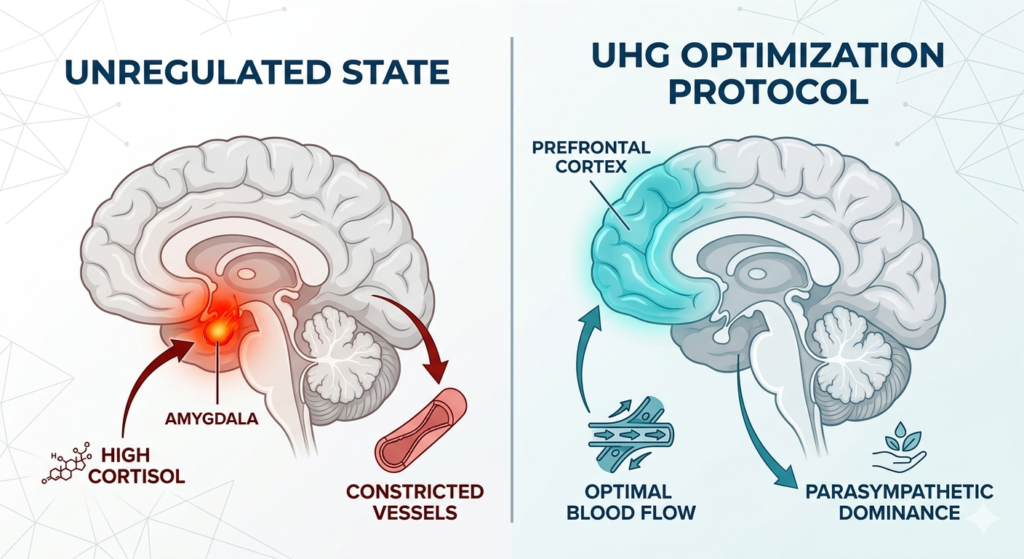
Your brain possesses an evolutionary “Security Guard”—the amygdala—that interprets surgery as a physical assault rather than a medical intervention. When this guard is on high alert, it triggers a cascade of stress hormones.
- The Complication: Elevated cortisol and adrenaline cause vasoconstriction (narrowing of blood vessels), which can impede the delivery of oxygenated blood to the surgical site.
- The Result: Higher pre-operative anxiety is clinically correlated with increased post-operative pain sensitivity and slower wound healing.
H2: What is the Safe Observer Protocol?
The Safe Observer Protocol is a specialized hypnotic framework that separates the “observing self” from the “physical experience,” ensuring the patient feels mentally empowered while the body remains physiologically still. This dual-layer approach allows the subconscious to process the surgery as a controlled, safe event.
The Pilot vs. GPS Metaphor: Who is in Control?
The #1 fear regarding clinical hypnosis is the loss of control. At Ultimate Hypnosis Guide, we explain it through the Pilot/GPS logic:
- The Surgeon (The Pilot): They are flying the plane (performing the clinical procedure).
- The Hypnosis (The GPS): The audio protocol acts as the GPS, providing a calm, steady background frequency that keeps the “weather” (your internal state) clear.
- You (The Owner): You remain the owner of the aircraft. You are not “asleep”; you are in a state of hyper-focused internal calm.
The Biological Fail-Safe
It is a common myth that hypnosis leaves you “trapped.” Our registered hypnotherapists emphasize the brain’s biological redundancy: if an actual emergency occurs, your Reticular Activating System (RAS) is engineered to bypass the hypnotic state and return you to full, alert consciousness instantly.
H2: Why does top-down regulation improve post-op recovery?
Top-down regulation improves recovery by maintaining “homeostatic stasis,” preventing the immune system from overreacting to surgical trauma. By lowering the inflammatory response through mental rehearsal, patients often require fewer analgesic medications and experience reduced hospital stays.
The Engineering Edge: Systemic Optimization
Think of your body as an operating system. Surgery is a “heavy-load program.” If you run that program while “background apps” (anxiety, high blood pressure, muscle tension) are draining your CPU, the system risks a crash.
Clinical hypnosis “closes” the unnecessary apps, dedicating 100% of your body’s resources to:
- Hemostasis: Maintaining stable blood pressure and minimizing excessive bleeding.
- Tissue Regeneration: Directing cellular energy toward repair.
- Pain Threshold Modulation: Utilizing the “Gate Control Theory” to dampen pain signals before they reach the brain.
The Skeptic’s Comparison: Why Professional Protocols Matter
Not all “relaxation” is created equal. Ultimate Hypnosis Guide utilizes systems-engineered audio designed specifically for clinical environments.
| Feature | Generic Relaxation Tracks | UHG: Surgery Success Protocol |
| Primary Goal | General Calm | Specific Neural Down-Regulation |
| Vagal Tone | Minimal Impact | Targeted Vagus Nerve Stimulation |
| Evidence Base | Anecdotal | Peer-Reviewed Clinical Trials |
| Suggestions | Passive (“You are at a beach”) | Active (“Your body heals with precision”) |
| Post-Op Focus | None | Specific Accelerated Recovery Triggers |
Ready to Optimize Your Surgical Outcome?
Clinical understanding is only the first half of the success equation. To implement these neural-regulation protocols, Ultimate Hypnosis Guide recommends the professionally engineered audio sessions from A Better Me
Frequently Asked Questions About Clinical Hypnosis for Surgery
Can I use hypnosis if I am under general anesthesia?
Yes. Research indicates that even under general anesthesia, the brain continues to process auditory information. Clinical hypnosis provides a “safety script” that the subconscious hears, maintaining lower stress markers even while unconscious.
Will I wake up during surgery if I use hypnosis?
No. Hypnosis does not interfere with the chemical efficacy of anesthesia; rather, it works in tandem with it to ensure your body doesn’t fight the medication, often allowing for smoother induction and emergence.
When should I start the surgery protocol?
For optimal “Systemic Optimization,” we recommend beginning the protocol 7 to 10 days before your scheduled procedure to “train” the neural pathways for rapid relaxation.
Summary: The Path to a Better Recovery
Whether you are preparing for a minor procedure or a major surgery, the goal remains the same: reducing systemic stress to allow your body to heal. You can access the full protocol to begin your training today below.