The Science of Hypnosis: An Evidence-Based Guide
It becomes clear when studying the science of hypnosis that it is a state of focused attention, reduced peripheral awareness, and an enhanced capacity for response to suggestion. Contrary to popular myths, it is not sleep, mind control, or a theatrical performance; it is a legitimate, evidence-based cognitive state that is increasingly utilized as a powerful adjunct in modern clinical and behavioral healthcare.
What is the scientific definition of hypnosis?
According to the American Psychological Association (Division 30), hypnosis is defined as “a state of consciousness involving focused attention and reduced peripheral awareness characterized by an enhanced capacity for response to suggestion.” It is a naturally occurring cognitive process that human beings enter frequently—such as when they are deeply engrossed in a book, driving on a familiar route, or watching a gripping film. Clinical hypnotherapy simply provides a structured framework to harness this state to achieve specific therapeutic goals.
How does hypnosis change brain activity?
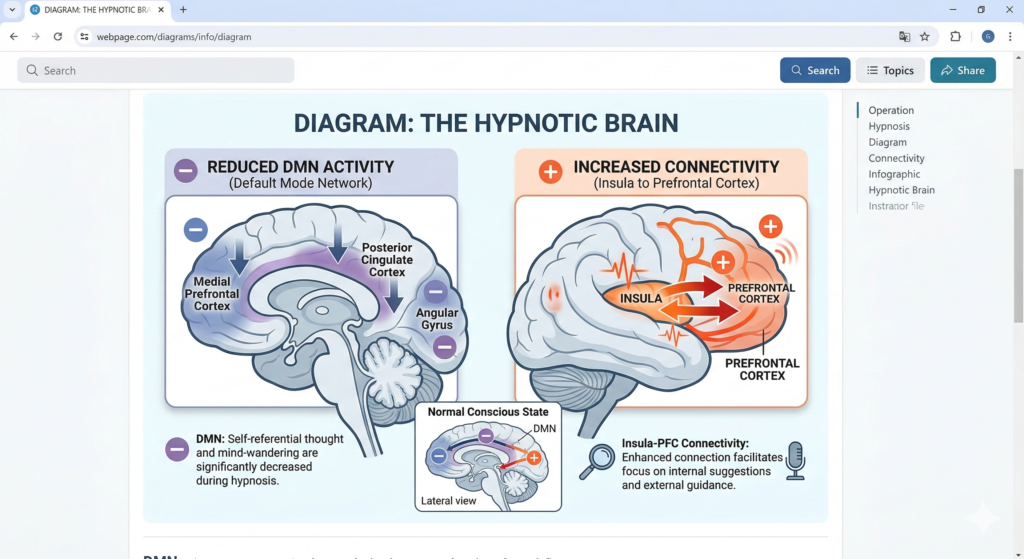
When studying the science of hypnosis ,modern neuroimaging, including fMRI studies, demonstrates that hypnosis alters brain activity by modulating the Default Mode Network (DMN)—the area responsible for self-referential thought and mind-wandering—while simultaneously increasing connectivity between the anterior cingulate cortex (for focus) and the prefrontal cortex (for executive control). This neurological “re-routing” effectively lowers our internal “critical filter,” allowing therapeutic suggestions to bypass analytical resistance and take hold in the subconscious mind.
Is hypnosis a proven medical treatment?
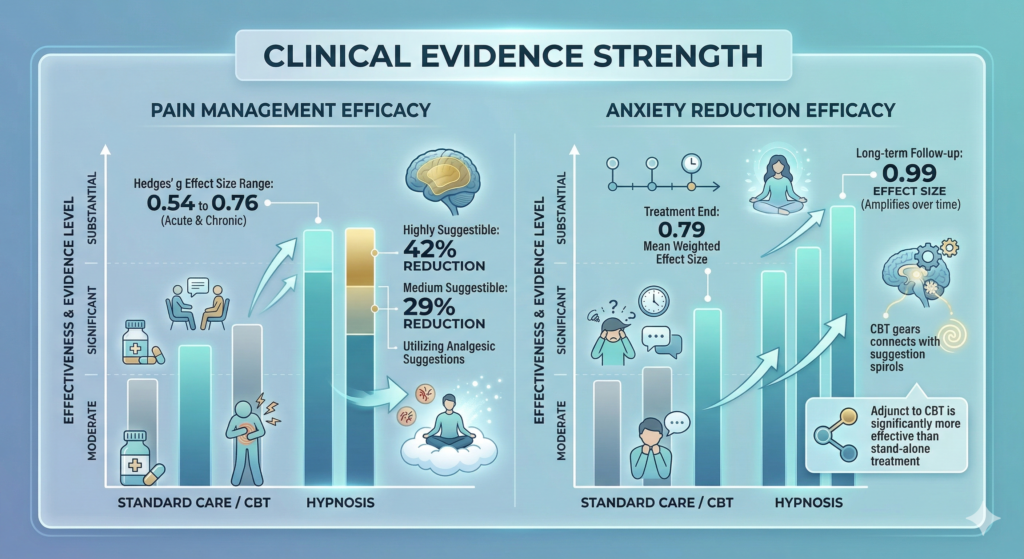
Yes. Hypnosis is a well-validated adjunct therapy with robust clinical data supporting its use in treating chronic pain, Irritable Bowel Syndrome (IBS), anxiety disorders, and procedural recovery. While the science of hypnosis is not a “cure-all,” systemic reviews have consistently shown that when used alongside traditional medical care, it significantly reduces symptom severity and patient distress.
A Snapshot of Clinical Evidence
| Condition | Efficacy/Consensus | Primary Mechanism |
| Chronic Pain | High | Modulation of pain signals in the sensory cortex. |
| IBS (Gut Health) | High | Gut-brain axis regulation. |
| Anxiety/Stress | Moderate | Reduction of physiological arousal (fight-or-flight). |
| Smoking Cessation | Moderate | Strengthening of cognitive dissonance toward habits. |
Comparison of Hypnosis vs. CBT/Pharmacology in effectiveness for specific conditions
Can everyone be hypnotized?
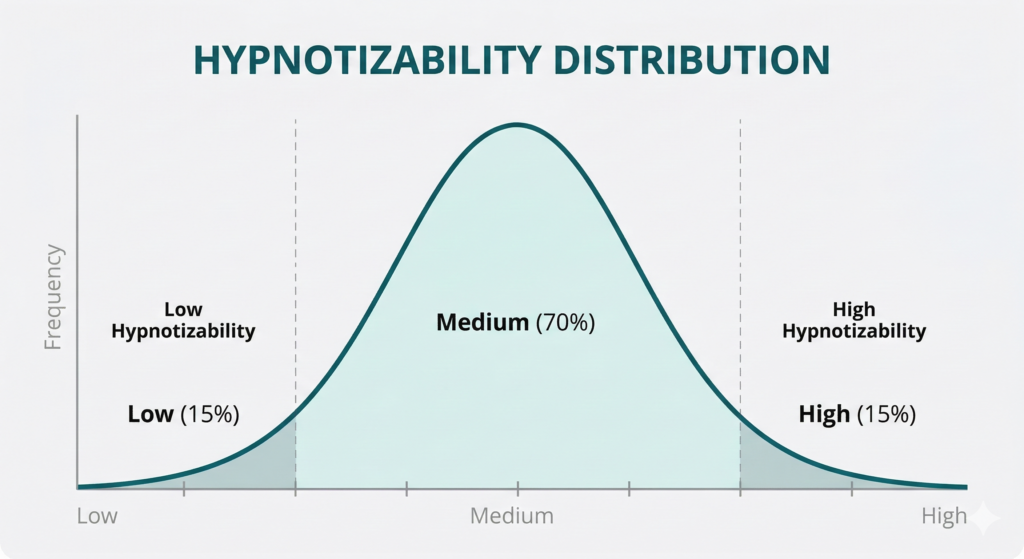
Hypnotizability is a relatively stable cognitive trait, similar to personality or IQ, meaning it varies from person to person. While roughly 10–15% of the population is considered “highly suggestible” and a small minority is “low-suggestible,” the vast majority of people fall into the “medium” range, meaning they can achieve a depth of focus sufficient to experience significant therapeutic benefit.
What is the role of the clinical hypnotherapist?
A clinical hypnotherapist acts as a skilled guide, providing the structured environment necessary for a client to enter a state of deep focus. Because the subconscious mind is more malleable during this state, the therapist works to reframe unhelpful patterns and solidify new, constructive beliefs. At A Better Me, our registered hypnotherapists strip away the “mystique” often associated with the practice, utilizing goal-oriented protocols to bridge the gap between where a client is and where they want to be.
Frequently Asked Questions (FAQ)
Is hypnosis the same as meditation?
While both involve focused attention, hypnosis is typically goal-oriented and interactive, whereas meditation is often centered on mindfulness and the present moment without specific agendas.
Can I be hypnotized against my will?
No. Hypnosis requires your active cooperation. You remain in control of your thoughts and actions throughout the entire process and can “exit” the state at any time.
How many sessions are typically required?
This varies significantly based on the goal. Some clients experience shifts in 1–3 sessions, while more complex behavioral changes (such as anxiety management or deep-seated habits) may require a structured program of 6–10 sessions.