Sleep Hypnosis for Insomnia: A Clinical Guide to Deeper Rest
Sleep Hypnosis: A Scientifically Grounded Approach to Restorative Sleep
For many of us, the ability to drift into deep, restorative sleep feels elusive. At A Better Me, as registered clinical hypnotherapists, we frequently see clients who have tried everything—from melatonin to restrictive sleep hygiene—yet still find themselves trapped in the cycle of “trying to sleep.”
Hypnosis offers a compelling, non-pharmacological bridge between an alert, racing mind and the peaceful transition into sleep. While it is not a “magic pill,” it is a scientifically backed tool that leverages your brain’s natural capacity for deep relaxation.
What is sleep hypnosis and how does it work?
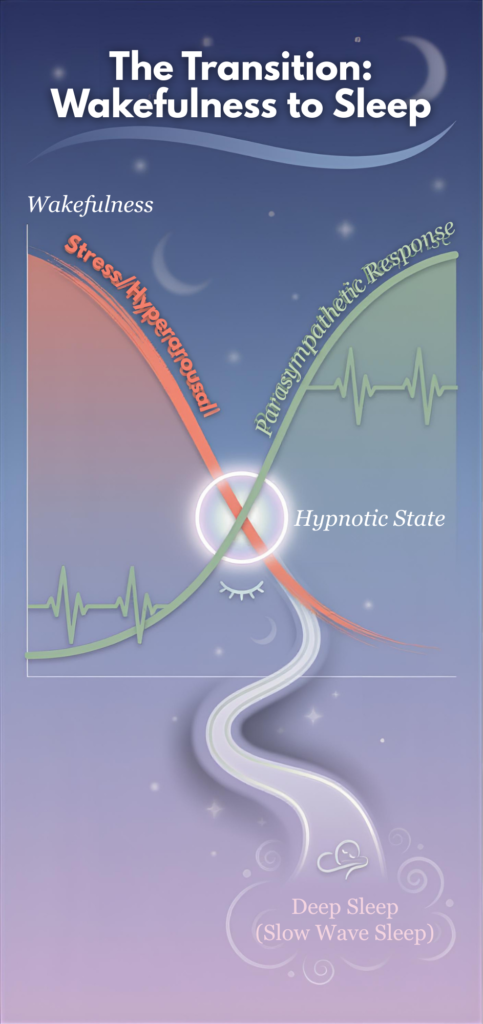
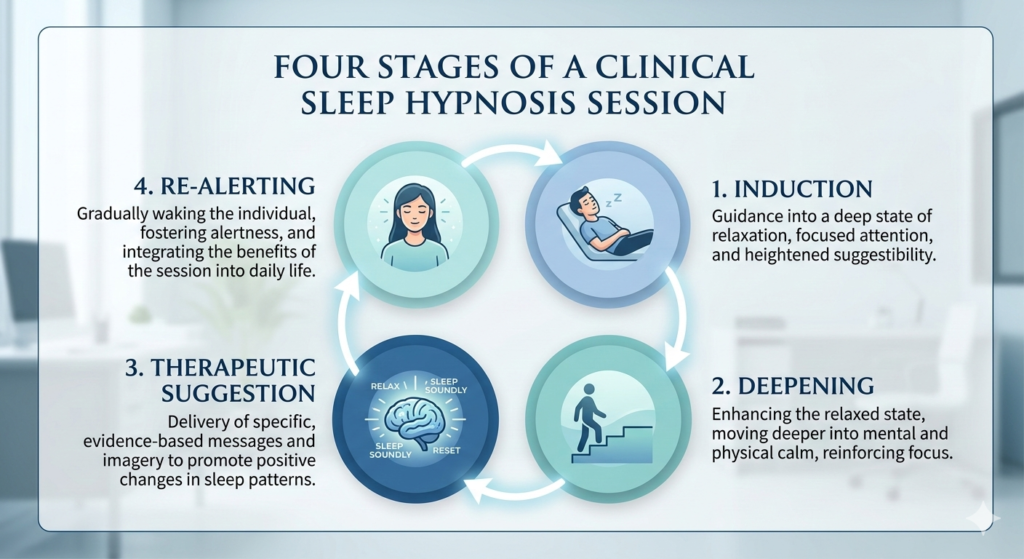
Sleep hypnosis is a therapeutic technique that uses focused attention, deep relaxation, and guided suggestion to shift the nervous system from a state of sympathetic “fight or flight” arousal to a parasympathetic “rest and digest” state.
When you are suffering from insomnia or sleep anxiety, your brain often stays stuck in a high-alert mode, dominated by beta brain waves (associated with active thinking and problem-solving). Sleep hypnosis helps you:
- Downregulate the Nervous System: By using guided imagery and progressive muscle relaxation, it lowers heart rate and blood pressure, signaling to your body that it is safe to sleep.
- Access the Hypnotic State: Through induction, you move into alpha and theta brain wave patterns, which are the neurological doorways to sleep.
- Bypass “Sleep Effort”: A major barrier to sleep is the “effort” of trying to sleep. Hypnosis provides a passive framework—you are simply listening, not performing.
Why do some people feel resistant to sleep hypnosis?
The Skeptic’s FAQ: Navigating the “Security Guard”
Resistance is often a sign of a highly active “Security Guard” protocol, a mental defense mechanism that prioritizes safety through hyper-vigilance. At A Better Me, our registered hypnotherapists design audio that utilizes this analytical energy as fuel for the induction process rather than fighting against it.
Will I lose control or “black out” while using this audio?
No. You remain the Pilot of your own consciousness at all times; our systems-engineered audio acts as the GPS, providing the coordinates for deep regulation while you maintain full mental autonomy. In our 15,000 hours of clinical practice, we ensure users stay in a state of hyper-awareness where they are more—not less—in control of their physiological responses.
Is this just a generic relaxation recording?
Absolutely not. Generic audio relies on “mood” and music, whereas our protocols are built on Systems Engineering and Neural De-escalation to target specific stress-response circuits in the brain. We don’t just “relax” you; we provide a structured cognitive load that redirects the “Security Guard” brain, allowing your biology to perform its default healing and sleep functions.
What if I can’t be hypnotized or my mind is too “busy”?
Hyper-vigilance is actually a sign of high intelligence and a strong “Security Guard” protocol, which makes you an ideal candidate for our Safe Observer approach. Our audio doesn’t require you to “quiet” your mind; it utilizes your busy thoughts as the very fuel for the induction process, turning your mental energy back toward regulation.
Can I become “stuck” in a hypnotic state?
It is biologically impossible to become stuck; hypnosis is a natural brain state (Theta/Alpha) similar to the “flow” you experience when lost in a complex task or a long drive. If the recording stops or an emergency occurs, your “Security Guard” brain immediately resumes its primary role, returning you to full Beta-wave alertness in seconds.
How does hypnosis influence your sleep architecture?
Research suggests that hypnosis influences sleep by reducing sleep latency—the time it takes to fall asleep—and, in highly suggestible individuals, it may potentially increase the duration of restorative Slow-Wave Sleep (SWS).
Unlike sleep medications, which can artificially sedate you (often disrupting your natural sleep architecture and reducing REM or deep sleep), hypnosis works with your body’s natural rhythms. Clinical studies have highlighted several key impacts:
Beyond mere sedation, many find success with hypnosis for sleep and healing. This approach integrates restorative suggestions into the session, promoting not just the onset of sleep but also physical recovery. These sessions, often labeled as hypnosis for relaxing sleep, help quiet the mind by shifting focus toward internal restoration rather than just ‘stopping’ thought.
- Reduced Hyperarousal: The “Hyperarousal Theory of Insomnia” posits that chronic sleep issues are driven by an overly active nervous system. Hypnosis directly targets this by quieting the “Default Mode Network” (the part of the brain responsible for rumination and “what-if” thinking).
- Slow-Wave Sleep (SWS) Enhancement: Some studies indicate that hypnotic suggestions to “sleep deeper” can increase the time spent in stage N3 sleep, which is critical for physical restoration, immune function, and memory consolidation.
- Consistency: By creating a “sleep cue”—a specific audio or guided session you use every night—you condition your brain to associate that ritual with the onset of sleep, effectively training your mind to “let go.”
Is hypnosis effective for insomnia?
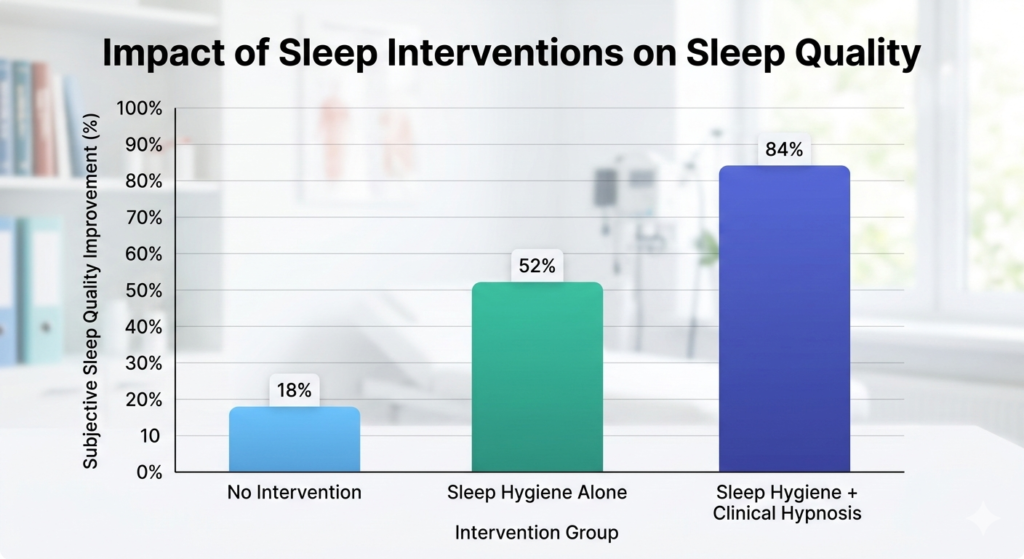
Yes, hypnosis is considered a promising, safe, and effective adjunctive therapy for insomnia, particularly for those whose sleep difficulties are rooted in anxiety, stress, or a racing mind.
While hypnosis is not a standalone “cure” for all sleep disorders, it is a scientifically supported tool. A meta-analysis published in the Journal of Clinical Sleep Medicine identified that hypnosis significantly shortened sleep latency compared to waitlist controls.
It is important to manage expectations:
- It is not mind control: You remain in full control of your faculties throughout the process.
- Individual differences matter: Research indicates that efficacy is often correlated with an individual’s “hypnotizability” (how easily they can enter a state of focused attention).
- Complementary vs. Alternative: At A Better Me, we view hypnosis as an adjunct to established treatments like Cognitive Behavioral Therapy for Insomnia (CBT-I). It works best when combined with healthy sleep hygiene practices.
Who can benefit from sleep hypnosis?
Sleep hypnosis is most effective for individuals dealing with “situational” or “psychophysiological” insomnia—where anxiety about sleep is the primary driver of the sleep problem itself.
If you find yourself experiencing any of the following, hypnosis may be an ideal tool for you:
- Racing Thoughts: You are physically tired but your mind refuses to “turn off.”
- Sleep Anxiety: You feel a sense of dread or pressure as bedtime approaches.
- Disrupted Sleep: You wake up during the night and find it difficult to return to sleep because of ruminating thoughts.
- Pain-Related Insomnia (Painsomnia): If pain is keeping you awake, hypnosis can help dissociate your mind from the physical sensation, making sleep easier to access.
How to incorporate hypnosis into your sleep hygiene routine
When choosing a session, consider your personal preferences for audio format. Whether you prefer guided hypnosis for sleep (which uses verbal instruction) or hypnosis for sleep with music (which focuses on ambient, soothing soundscapes), consistency is more important than the specific style. Many listeners find that a hypnosis for sleep female voice provides a more nurturing, calm cadence, but the key is to find the instructor that allows you to relax fully.
Length and pacing also matter. If you are struggling with a busy schedule, a sleep hypnosis 30-minute session is often the perfect length to allow for a full induction. Conversely, if you are looking for hypnosis to sleep fast, look for sessions that begin immediately with progressive muscle relaxation techniques rather than long, conversational introductions.
To maximize the benefits of sleep hypnosis, treat it as a dedicated “wind-down” ritual rather than a last-ditch effort to save a night of lost sleep.
- Consistency is Key: Use your chosen hypnosis audio or guided session for at least 14 consecutive days. This builds the neurological pathway (the “sleep association”).
- Optimize Your Environment: Ensure your bedroom is cool, dark, and quiet before starting the session.
- Passive Attitude: If you find your mind wandering, do not fight it. Gently acknowledge the thought and guide your attention back to the hypnotist’s voice.
- Use Professional Guidance: Avoid generic “hypnosis music” that may not have clinical backing. Seek out recordings created by certified clinical hypnotherapists.
What makes “A Better Me” protocols different from free meditation apps?
The primary difference is the shift from “Atmosphere” to “Architecture.” While free apps aim for temporary calm, A Better Me utilizes clinical systems designed to recalibrate the Autonomic Nervous System for long-term neuroplasticity.
| Feature | Generic Relaxation ($0.99 or Free) | Systems-Engineered Audio ($29.00) |
| Foundation | Artistic/Musical (Vague) | Clinical/Engineering (Precise) |
| Objective | To make you feel “calm.” | To re-calibrate the Nervous System. |
| Mechanism | Passive listening. | Active Neural Off-loading. |
| Expertise | Voice actors/Guides. | Licensed Therapists & Engineers. |
| The Result | Temporary distraction. | Long-term Neuro-plasticity. |
Frequently Asked Questions (FAQ)
Q: Can I fall asleep during the hypnosis session?
A: Yes. In fact, for sleep hypnosis, falling asleep is the goal. Unlike clinical hypnosis for other issues, where you need to stay alert to process suggestions, sleep hypnosis is designed to lead you gently into natural, restorative sleep.
Q: Does sleep hypnosis work for everyone?
A: While many find relief, studies suggest that results can vary based on individual hypnotizability. Even if you do not feel you are in a “deep trance,” the simple act of listening to a calming, structured routine can provide the relaxation necessary to drift off.
Q: Is sleep hypnosis safe for insomnia treatment ?
A: Yes, sleep hypnosis is widely considered safe and non-invasive, with no side effects comparable to pharmaceutical sleep aids. At A Better Me, we approach it as a natural, self-guided mental relaxation technique. Unlike medications that can create dependency, hypnosis empowers you to build your own neurological pathways for falling asleep.
Q: How many sessions of sleep hypnosis do I need to see results?
A: Sometimes one sleep hypnosis session for insomnia treatment will give a reset and have you drifting off peacefully Most people begin to notice improvement in their ability to drift off within the first 7 to 14 days of consistent practice. Because A Better Me utilizes evidence-based repetition, you are effectively training your brain to associate the session with sleep; therefore, the more consistently you listen, the more deeply the “sleep cue” is reinforced.
References
- Chamine, I., et al. (2018). Hypnosis Intervention Effects on Sleep Outcomes: A Systematic Review. Journal of Clinical Sleep Medicine.
- Cordi, M. J., et al. (2020). Hypnotic suggestions before nighttime sleep extend slow-wave sleep. International Journal of Clinical and Experimental Hypnosis.
- Elkins, G., et al. (2015). Clinical Hypnosis for the Management of Sleep Disorders. American Journal of Clinical Hypnosis.
- Lam, P. H., et al. (2015). Hypnotherapy for insomnia: a systematic review and meta-analysis of randomized controlled trials. Complementary Therapies in Medicine.
- Besedovsky, L., et al. (2022). Hypnotic enhancement of slow-wave sleep increases sleep-associated hormone secretion. Communications Biology.